Why Gran Canaria is the Most Underrated Trail Running Destination in Europe
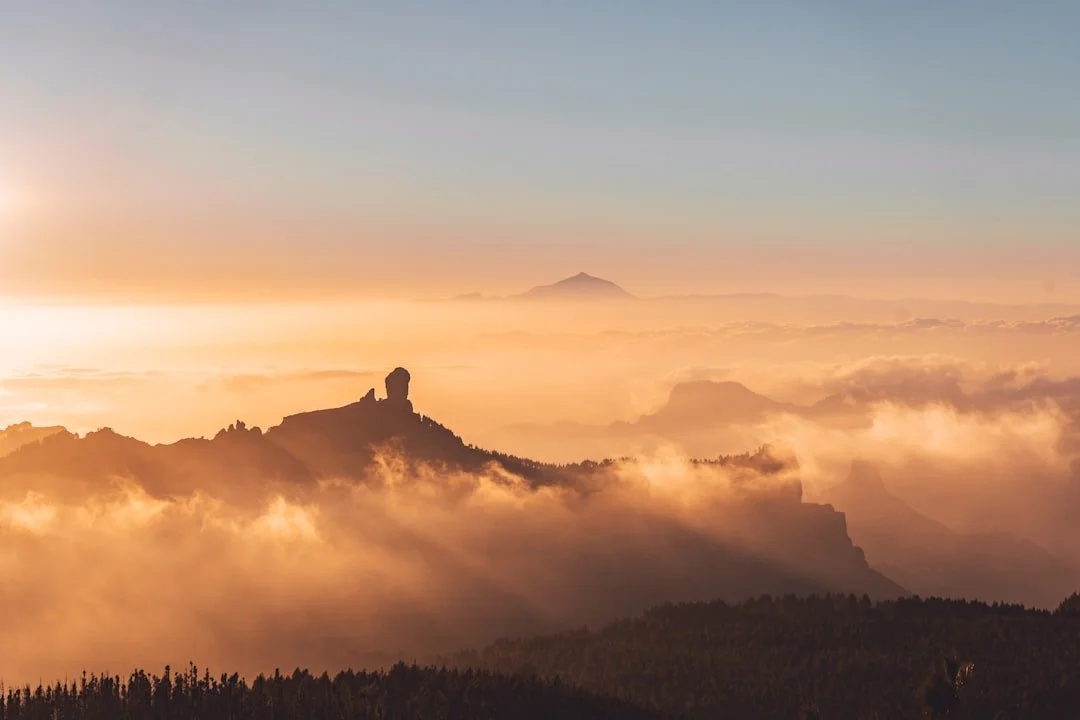
Forty years of package holidays have buried what Gran Canaria actually is. Within a fifty-kilometre stretch you have desert dunes, ancient volcanic ravines, pine-forested ridges and a summit at nearly 1,900 metres. Most visitors never leave the coast. The trails above them remain almost entirely empty.
There's a version of Gran Canaria that most people know. The airport. The resorts. The all-inclusive hotels lined up along the southern coast. It's done a thorough job of burying what this island actually is.
Which is exactly why trail runners should pay attention.
The mini-continent nobody runs
Gran Canaria earns its nickname. Within a fifty-kilometre stretch you have desert dunes, ancient volcanic ravines, pine-forested highland ridges and a summit at 1,813 metres that looks out across the Atlantic to Tenerife on a clear day. The terrain shifts so dramatically from south to north, coast to interior, that geographers have called it a micro-continent.
Most visitors arrive and spend their entire holiday within walking distance of the beach. The trails above them — and there are hundreds of kilometres of them — remain almost entirely empty.
I've been looking at Gran Canaria for a long time. Very few destinations have this combination: serious, varied, accessible terrain; a warm dry climate in the months when the rest of Europe is difficult; excellent infrastructure; and almost no trail running presence at all. It's an open goal.
Four landscapes in four days
What makes Gran Canaria genuinely special for trail running isn't just the quality of any single day — it's how different each day feels from the last.
An old sealed road, long closed to traffic, runs out along the cliff above the harbour. The views back over the bay and out to sea are extraordinary, and the running is easy — perfect for legs that have just arrived off a flight.
Pine forest, ancient rock walls, paths that drop through hamlets that feel untouched by the last century. This is the terrain that surprises people most. You're thirty minutes from the airport and you could be anywhere in a remote mountain range.
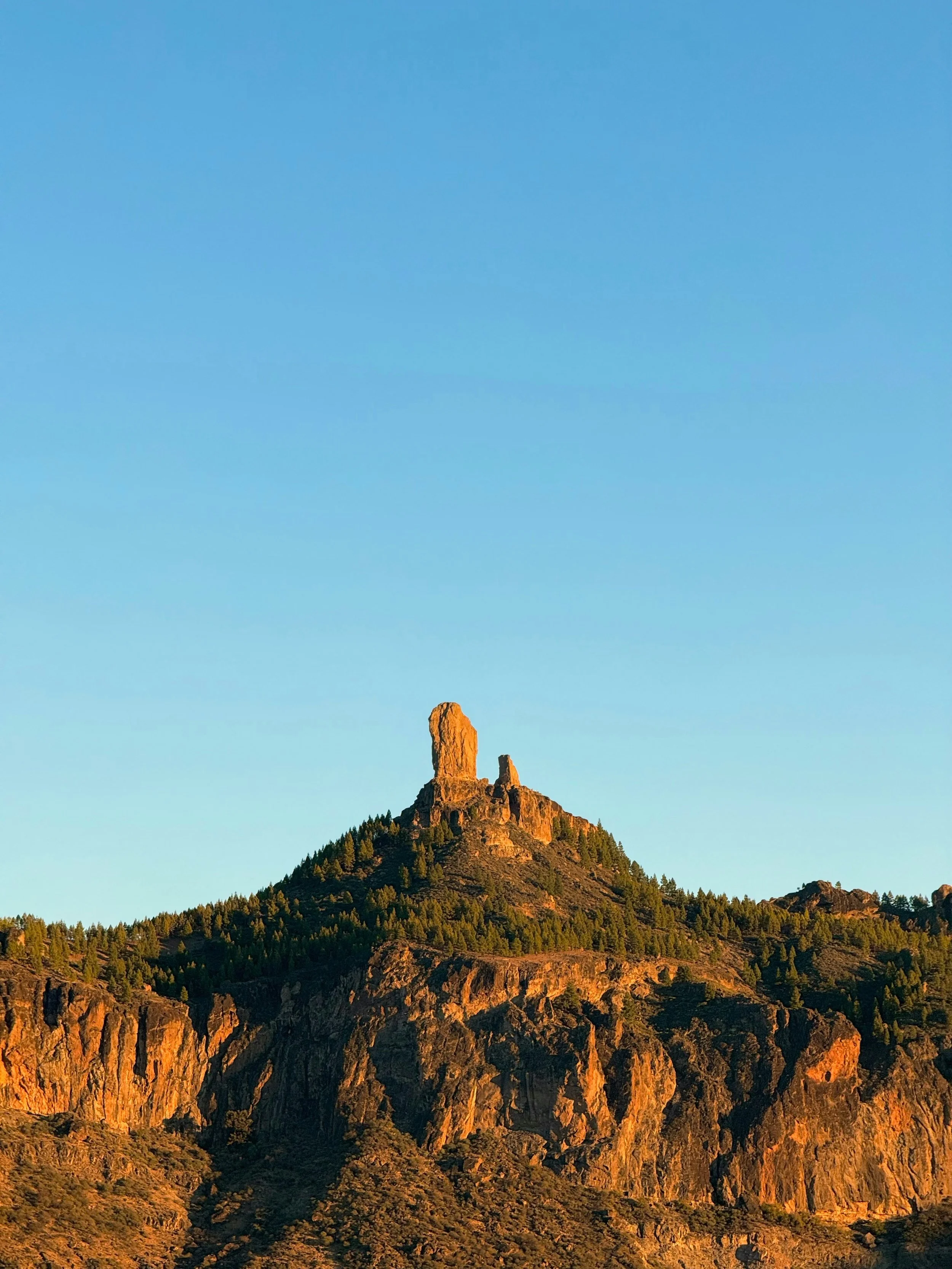
We drive to Cruz de Tejeda and run through highland trails to the summit of Roque Nublo at 1,813 metres. The Guanche people, the island's original inhabitants, considered this rock sacred. Stand on it on a clear March morning and you'll understand why. Teide rises from the Atlantic to the west. The desert south stretches below you. The green north rises ahead. It's one of the finest viewpoints I've found anywhere in Europe.
We run the canyon floor and the ridge above it. And then we stop for lunch in a cave restaurant carved directly into the canyon wall, a tradition dating back centuries. There is no equivalent of this on any other trip we run. It's the kind of moment that people talk about for years.
"The first guest to book our inaugural departure did so while she was actively on another Pure Trails trip. That's the best endorsement I can think of."
Why March — and October
We're launching two departures — March and October — and both are deliberate. March is Gran Canaria's sweet spot: dry season, 22–25°C on the coast, cooler and perfect at altitude. The island is quiet, the trails are ours, and the light in the mornings is extraordinary. You fly out of a grey British winter and land somewhere that feels like a different planet.
October works for the same reasons, with the added appeal of coming off the back of summer — the island returning to itself after peak season, trails settled, temperature still warm enough that an afternoon swim after a big day in the mountains is entirely reasonable.
The Transgrancanaria connection
Every February, Gran Canaria hosts the Transgrancanaria — one of the most respected ultramarathons in Europe, with races ranging from 36km to a 360km behemoth that crosses the entire island. Serious trail runners know the name. Most of them have never actually run the trails.
Our itinerary takes in sections of these routes. Not racing them — experiencing them. At a pace that lets you look up, take in where you are, stop at the cave restaurant, swim in the sea at the end. The terrain is world-class. The experience doesn't have to be a suffer-fest.
Our base: Puerto de Mogán
We spent a long time deciding where to base this trip. Maspalomas is the obvious choice — central, well-connected, easy. We chose Puerto de Mogán instead.
It's a small harbour town on the western coast, known to those who know it as the Little Venice of the Canaries. Quieter, more characterful, and considerably more charming than the resort strips to the east. The Cordial Mogán Playa sits right in the heart of it — 4-star, pool on site, harbour restaurants a short walk from the front door. After a big day in the mountains, it's exactly where you want to return to.
Why we chose Gran Canaria
Pure Trails trips aren't built around destinations that are easy to sell. They're built around places we genuinely believe offer something extraordinary — terrain, culture, experience — that most people haven't found yet. Albania was like that. Georgia was like that. Gran Canaria is like that.
If you've been looking for a trail running trip that combines serious running with a destination that surprises you — and you'd rather spend March in the Canarian sunshine than the Cotswold rain — this one is worth a look.
Two departures. March and October 2027.
Fully guided, fully supported, from £1,595pp. 4-star base in Puerto de Mogán. Four completely different landscapes. Cave restaurant on Day 4.